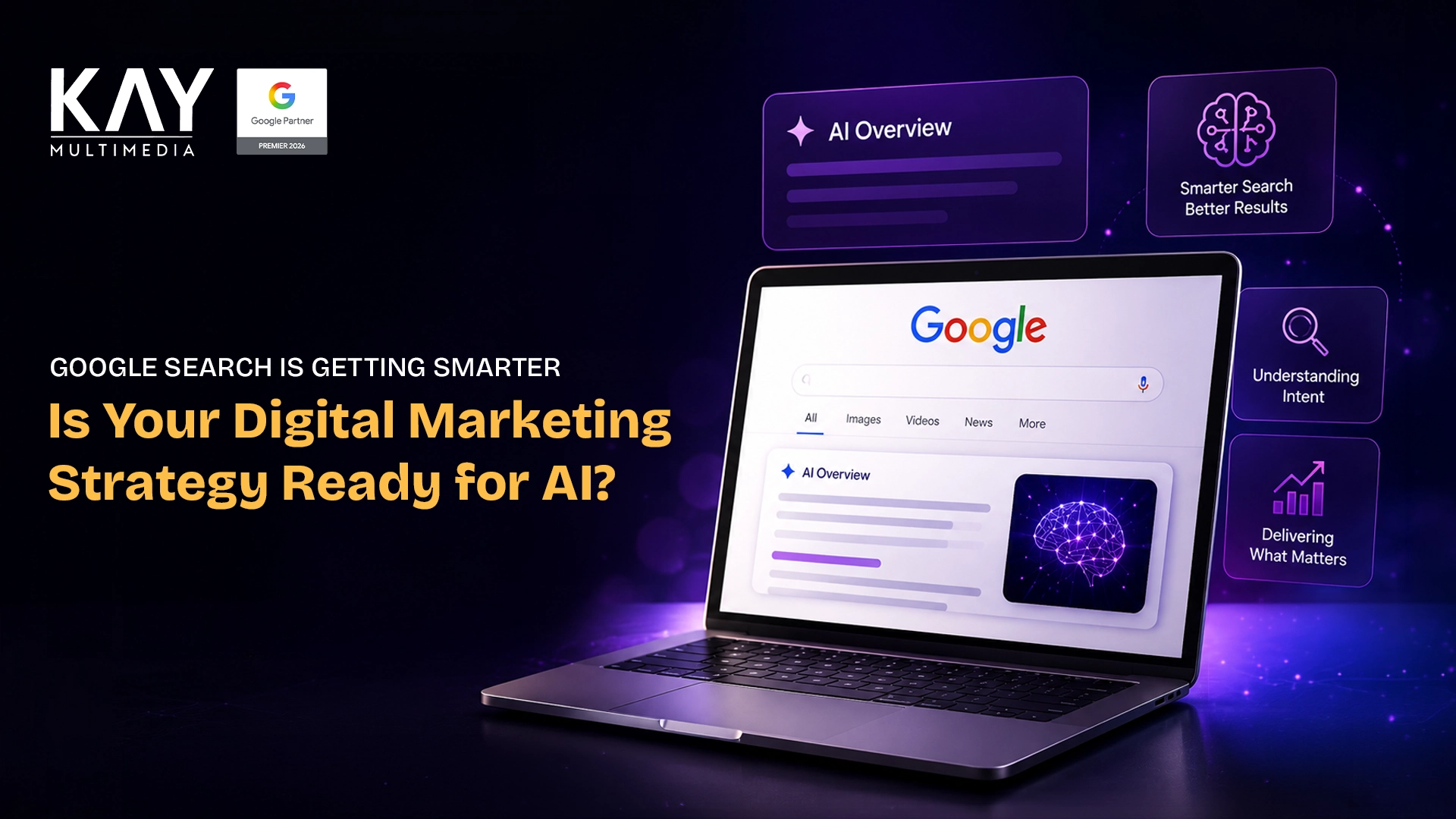
Google Search has evolved significantly over the years. Earlier SEO strategies focused heavily on keywords, backlinks and website optimization. However, between 2016 and 2021, Google introduced major updates that transformed how websites were indexed, understood and ranked.
From RankBrain and mobile-first indexing to BERT and Core Web Vitals, these developments shifted SEO toward search intent, content relevance and user experience.
For businesses aiming to improve online visibility, understanding these changes is essential. Working with the Best Digital Marketing Agency in Chennai can help brands implement effective SEO strategies that align with Google's evolving search systems.
Let's explore the major Google SEO developments from 2016 to 2021 and their impact on digital marketing.
2016: RankBrain and Penguin Changed Traditional SEO
In 2016, keywords and backlinks remained essential ranking factors. However, Google's machine-learning technology was making search results more relevant.
RankBrain and Search Intent
RankBrain, introduced in 2015, helped Google interpret unfamiliar and complex search queries. By 2016, its role highlighted the growing importance of understanding user intent.
Instead of focusing only on exact-match keywords, businesses needed to create content that answered users' questions.
For example, someone searching for "how to improve website traffic" expects practical SEO solutions rather than content filled with repeated keywords.
Learn more about keyword optimization in our previous blog, Do Keywords Really Impact SEO Rankings?.
Penguin 4.0 and Backlink Quality
Google released Penguin 4.0 in September 2016, integrating it into its core ranking algorithm.
This update improved Google's handling of link spam and reinforced the importance of earning relevant, high-quality backlinks.
Businesses needed to prioritize genuine link-building opportunities rather than manipulative techniques.
Key takeaway: SEO began moving beyond keyword repetition and backlink quantity toward relevance, intent and link quality.
2017–2018: Mobile-First Indexing Transformed SEO
As mobile internet usage increased, Google recognized the importance of delivering better search experiences for smartphone users.
Google announced mobile-first indexing experiments in 2016, continued preparations in 2017 and began rolling out mobile-first indexing in March 2018.
What Is Mobile-First Indexing?
Mobile-first indexing means Google primarily uses the mobile version of a website's content for indexing and ranking.
Previously, Google's indexing systems generally relied on desktop content.
According to Google Search Central's mobile-first indexing announcement, Google began migrating websites that followed mobile-first best practices in March 2018.
Why Was Mobile Optimization Important?
Businesses needed websites that performed effectively across smartphones, tablets and desktops.
Important mobile SEO practices included:
- Creating responsive website designs.
- Maintaining consistent mobile and desktop content.
- Improving website loading speed.
- Optimizing images and navigation.
- Making important content accessible to search engines.
In July 2018, Google's mobile Speed Update also made loading speed a ranking factor for mobile searches.
For businesses targeting customers in Chennai, mobile optimization became essential for providing convenient access to services and business information.
Key takeaway: Mobile-friendly design became a fundamental requirement for sustainable SEO performance.
2019: Google's BERT Update Improved Search Understanding
In October 2019, Google introduced BERT (Bidirectional Encoder Representations from Transformers), an important advancement in natural-language understanding.
What Is Google's BERT Algorithm?
BERT helps Google understand the context and relationships between words in search queries.
Rather than evaluating keywords individually, it enables Google's systems to interpret the meaning of phrases more effectively.
For example:
- "Digital marketing courses in Chennai" indicates educational intent.
- "Digital marketing agency in Chennai" indicates commercial intent.
Although these searches contain similar words, their purposes are different.
How Did BERT Influence SEO?
BERT reinforced the importance of creating natural, informative and user-focused content.
Businesses needed to:
- Answer customer questions clearly.
- Use relevant headings and subheadings.
- Focus on search intent.
- Avoid unnecessary keyword stuffing.
- Provide comprehensive and meaningful information.
This development also supported the principles behind Answer Engine Optimization (AEO), where content is structured to deliver direct answers to user questions.
Key takeaway: Understanding user intent and creating helpful content became increasingly important for organic search visibility.
2020: Core Web Vitals Brought User Experience Into Focus
In May 2020, Google introduced Core Web Vitals, a set of performance metrics designed to measure important aspects of website experience.
What Were the Original Core Web Vitals?
1. Largest Contentful Paint (LCP)
Measures how quickly the main visible content loads. A good LCP score is 2.5 seconds or less.
2. First Input Delay (FID)
Measured how quickly a website responded to a user's first interaction. A good FID score was 100 milliseconds or less.
3. Cumulative Layout Shift (CLS)
Measures unexpected movement of webpage elements. A good CLS score is 0.1 or less.
Note: Interaction to Next Paint (INP) replaced FID as a Core Web Vital in March 2024.
Why Did Website Performance Matter?
Slow-loading pages, unstable layouts and delayed interactions can frustrate visitors and discourage enquiries.
Businesses were encouraged to optimize images, reduce unnecessary scripts, improve server performance and create responsive layouts.
For practical optimization techniques, explore our blog, How Fast Website Speed Improves Google Rankings.
Key takeaway: Website speed and usability became increasingly important parts of a comprehensive SEO strategy.
2021: Google's Page Experience Update Changed SEO Priorities
In 2021, Google began rolling out its page experience update for mobile search, incorporating Core Web Vitals into its ranking systems.
The update encouraged businesses to improve the overall experience visitors received when accessing their websites.
Important Page Experience Considerations
- Website loading performance.
- Mobile usability.
- HTTPS security.
- Visual stability.
- Responsive page interactions.
- Avoiding intrusive interstitials.
Google continued prioritizing relevant and useful content, while page experience signals contributed to its broader ranking systems.
Google's official Core Web Vitals documentation provides guidance on measuring and improving website performance.
Key takeaway: Effective SEO requires a balance of valuable content, technical optimization and positive user experience.
Google SEO Evolution 2016–2021: Quick Overview
| Year | Major Development | SEO Impact |
| 2016 | RankBrain and Penguin 4.0 | Search intent and backlink quality |
| 2017 | Mobile-first preparation | Mobile content accessibility |
| 2018 | Mobile-first rollout and Speed Update | Mobile usability and speed |
| 2019 | BERT | Natural-language understanding |
| 2020 | Core Web Vitals introduced | Website performance measurement |
| 2021 | Page Experience Update | User experience ranking signals |
These developments demonstrate how Google expanded its approach to search relevance, technical performance and user satisfaction.
What Can Businesses Learn From Google's SEO Evolution?
Google's updates between 2016 and 2021 provide valuable lessons for businesses developing long-term digital marketing strategies.
Focus on Search Intent
Create content that matches what customers genuinely want to find rather than targeting keywords through repetition.
Improve Technical SEO
Maintain a crawlable website with logical navigation, optimized metadata, relevant internal links and mobile-friendly pages.
Publish Helpful Content
Develop informative articles, service pages and FAQs that address customer needs and demonstrate subject expertise.
Build Relevant Backlinks
Earn backlinks through credible publications, useful resources and genuine industry relationships.
Combine SEO With AEO
Use clear answers, question-based headings and well-organized content to support both traditional search visibility and answer-oriented search experiences.
Businesses looking to strengthen organic visibility can explore our SEO Content Strategy Services in Chennai for technical SEO, keyword research, content optimization and search performance improvements.
To understand the relationship between organic discoverability and brand awareness, read our previous article, Website Visibility vs. Brand Visibility: What's the Difference?.
Frequently Asked Questions
1. What was the biggest Google SEO change between 2016 and 2021?
Google increasingly emphasized search intent, mobile-first indexing, natural-language understanding and user experience alongside traditional SEO signals.
2. Are keywords and backlinks still important for SEO?
Yes. Relevant keywords and quality backlinks remain valuable, but they should be supported by helpful content, technical SEO and a positive website experience.
3. What is the difference between RankBrain and BERT?
RankBrain helps Google interpret queries using machine learning, while BERT improves understanding of word context and relationships in natural-language searches.
4. How does mobile-first indexing affect SEO?
Google primarily uses mobile website content for indexing and ranking, making mobile accessibility and content consistency important.
5. How can businesses improve their SEO performance?
Businesses can improve SEO through relevant content, technical optimization, mobile usability, quality backlinks, internal linking and ongoing performance monitoring.
Conclusion
Between 2016 and 2021, Google's search systems evolved significantly, moving beyond traditional keyword and backlink optimization toward a stronger emphasis on search intent, mobile accessibility, natural-language understanding and user experience.
RankBrain, Penguin 4.0, mobile-first indexing, BERT and Core Web Vitals each contributed to this transformation.
For businesses, the lesson is clear: sustainable SEO success requires useful content, technical excellence and a website experience designed around users.
Grow Your Business With KAY Multimedia Solutions – A Google Premier Partner
Looking for the Best Digital Marketing Agency in Chennai to improve your online visibility and generate qualified leads?
KAY Multimedia Solutions, a Google Premier Partner, helps businesses strengthen their digital presence through SEO, Google Ads, performance marketing, content strategy and website optimization.
Whether your goal is to improve Google rankings, attract relevant traffic or increase enquiries, our team can help you build a results-focused digital marketing strategy.
Ready to strengthen your online presence?
Contact KAY Multimedia Solutions today and take the next step toward sustainable digital growth.




 Call Now

