
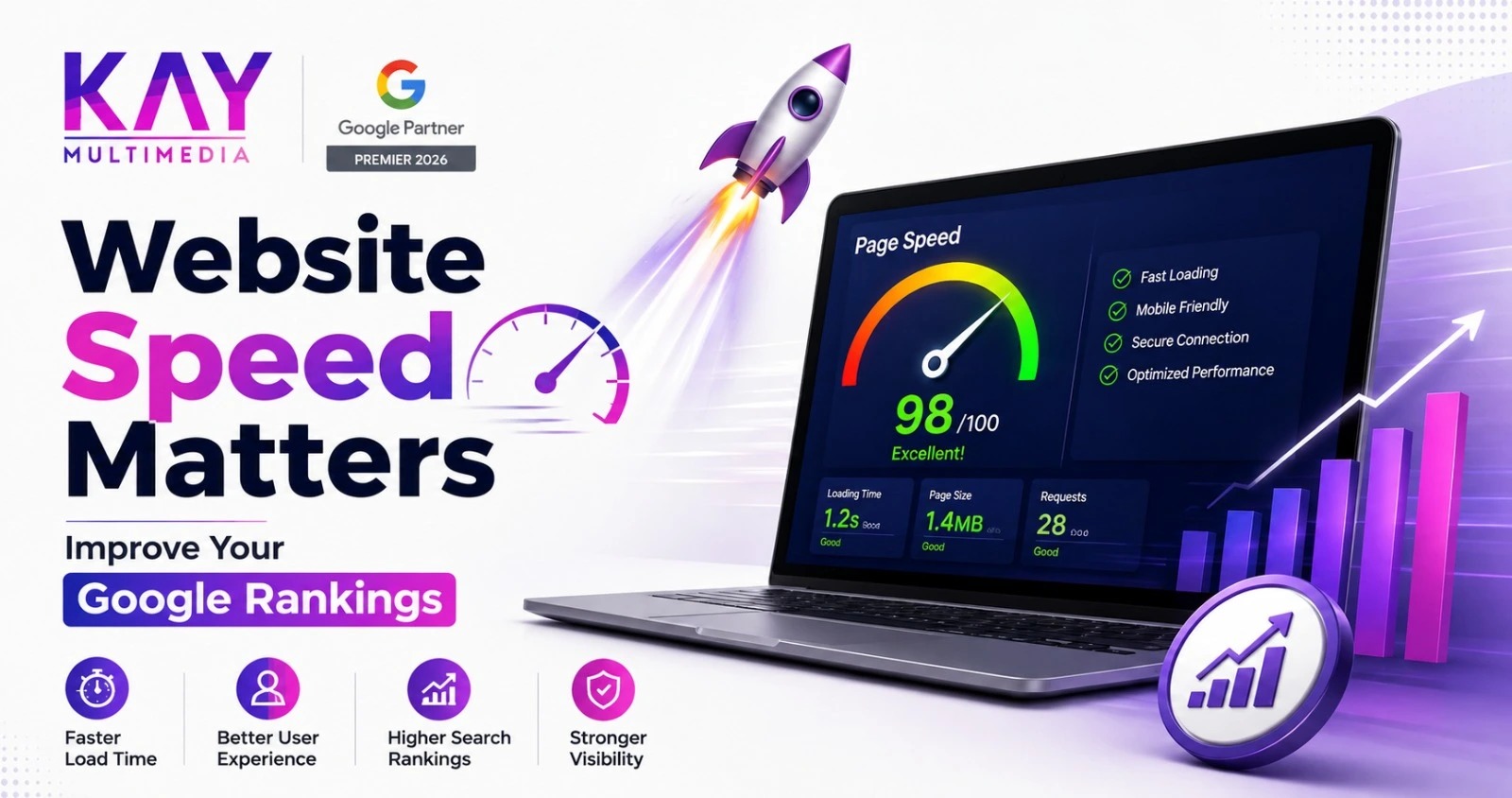
A fast website can improve the experience people have with your business and support your SEO performance. Google considers page experience signals, including Core Web Vitals, as part of its ranking systems. For businesses investing in SEO, choosing the right Web Design Company in Chennai also means making website speed part of the design and development process.
A slow website can frustrate visitors before they even see what your business offers. Pages may take too long to load, buttons may respond slowly, or content may shift while the page is loading. These issues can affect usability, engagement and your ability to convert visitors into customers.
Does Website Speed Really Affect Google Rankings?
Yes, website performance can contribute to search performance, but speed alone does not guarantee higher rankings.
Google evaluates many signals when determining which pages should appear for a search. Page experience and Core Web Vitals are among the factors Google recommends website owners monitor. However, relevance, content quality and other search signals remain essential.
This means you should not think of website speed as a shortcut to the first position. Instead, consider it one part of building a technically strong website that is useful and easy to navigate.
For a business website, the goal is simple: help Google understand your pages and help visitors use them without unnecessary delays.
What Are Core Web Vitals?
Core Web Vitals are user-focused performance metrics that measure different aspects of a webpage experience. Google currently identifies three Core Web Vitals:
- Largest Contentful Paint (LCP): Measures how quickly the main content becomes visible.
- Interaction to Next Paint (INP): Measures how responsive a page is when users interact with it.
- Cumulative Layout Shift (CLS): Measures unexpected movement of content while the page loads.
Google's documentation confirms that INP replaced FID as a Core Web Vital.
These measurements are especially useful because they look beyond simply asking, "Did the page load?" They help website owners understand what the experience is like for actual users.
You can use Google PageSpeed Insights to check website performance and identify potential issues.
How Does a Fast Website Improve the User Experience?
Website speed matters because people expect websites to respond quickly.
Imagine someone searching for a service in Chennai using a mobile phone. They click your website, but the homepage takes several seconds to become usable. If important content is still loading or the page keeps shifting, the visitor may leave before contacting your business.
A faster website makes it easier for users to:
- Find important information
- Navigate between pages
- Read content
- Complete forms
- View products or services
- Contact the business
This creates a connection between technical SEO and conversion optimization. A technically strong website is not only easier for search engines to process; it can also provide a better experience for potential customers.
Which Website Elements Usually Make a Website Slow?
Website speed problems rarely come from one single issue. Several elements can contribute to poor performance.
Large Images
High-resolution images can significantly increase page weight. Compressing images and serving appropriately sized formats can reduce unnecessary loading.
Too Much JavaScript
JavaScript can add useful functionality, but excessive or poorly optimized scripts may delay rendering and interactions.
Unoptimized CSS and Code
Unused CSS, inefficient code and unnecessary resources can increase the amount of work a browser needs to perform.
Poor Hosting Performance
The server also matters. A website may have well-optimized pages but still respond slowly if its hosting environment or server configuration creates delays.
Too Many Third-Party Scripts
Chat widgets, tracking tools, advertising scripts and other external resources can add processing and network requests.
A good Web Design Company in Chennai should consider these factors during development rather than waiting until after launch to investigate performance problems.
How Can You Make a Website Faster?
Website speed improvement should begin with measurement. Do not make changes based only on assumptions.
Start by testing important pages using PageSpeed Insights and reviewing both performance diagnostics and Core Web Vitals where field data is available. Real-user data can reveal problems that a controlled laboratory test may not show.
Next, focus on practical improvements such as:
- Compress and properly size images.
- Remove unnecessary scripts and plugins.
- Reduce unused CSS and JavaScript.
- Improve server response times.
- Use browser caching where appropriate.
- Minify suitable CSS, JavaScript and HTML resources.
- Make the website responsive for mobile users.
- Test important landing pages after major design changes.
Google also recommends mobile-friendly website implementation because Google uses the mobile version of a site for indexing and ranking through mobile-first indexing.
Why Website Speed Matters for Mobile SEO
For many businesses, the first interaction with a website happens on a smartphone.
A website that looks attractive on a desktop but performs poorly on mobile can create a frustrating experience. Text may be difficult to read, buttons may be hard to tap, images may take too long to load, and interactive elements may respond slowly.
Responsive web design helps a website adapt to different screen sizes while maintaining usability. Performance optimization should therefore be considered alongside mobile design rather than treated as a separate task.
This is particularly relevant for local businesses targeting searches such as "digital marketing agency in Chennai," "dentist near me," or "web design company in Chennai," where users may quickly compare several businesses before making contact.
Can a Fast Website Improve Conversions?
It can help create better conditions for conversions, although speed does not guarantee more leads or sales.
A visitor who can quickly understand your service, navigate your website and complete a contact form has fewer technical barriers between their search and your business.
Think about a service page. If the page loads quickly, the headline is clear, the call-to-action is visible and the enquiry form works smoothly, the visitor can move through the decision-making process without unnecessary friction.
That is why website performance should be considered alongside SEO, UX, content and conversion optimization.
What Should Businesses Ask a Web Design Company in Chennai About Website Speed?
Before selecting a website development partner, ask how performance will be handled during the project.
A useful discussion should cover image optimization, responsive design, Core Web Vitals, mobile performance, hosting, technical SEO and post-launch testing.
It is also worth asking whether the team will test the website after development instead of simply checking whether all pages "look good."
KAY Multimedia Solutions' Web Development Services explains its approach to responsive, SEO-friendly and performance-focused website development for businesses.
For businesses that also need ongoing organic visibility, you can explore KAY Multimedia Solutions' SEO Content Strategy services as part of a broader digital marketing strategy.
Frequently Asked Questions About Website Speed and Google Rankings
1. Does Google rank fast websites higher?
Website speed and page experience can contribute to Google's ranking systems, but speed alone does not determine rankings. Relevance, content quality and many other signals also influence how pages perform in Google Search.
2. What is a good website speed for SEO?
There is no single loading-time number that guarantees good rankings. Instead, businesses should monitor Core Web Vitals, especially LCP, INP and CLS, while also checking the overall user experience on real devices and networks.
3. How can I check my website speed?
You can check your website using Google PageSpeed Insights. It provides performance information and, where available, real-user data that can help identify Core Web Vitals issues.
4. Is website speed important for mobile SEO?
Yes. Google uses the mobile version of websites for indexing and ranking under mobile-first indexing. A responsive, fast and usable mobile website is therefore an important part of a modern SEO strategy.
5. Can a web design company improve my website speed?
Yes. A professional web development team can identify issues involving images, code, scripts, hosting, responsive design and page structure. Performance should ideally be considered during website development rather than added as an afterthought.
Build a Website That Is Designed for Users and Search
Website speed is not simply a technical score. It affects how quickly visitors can access your content, interact with your website and decide whether to contact your business. Strong website development combines performance, mobile usability, technical SEO, useful content and clear navigation.
If you are planning a new website or want to improve the performance of an existing one, KAY Multimedia Solutions can help you build a website with business goals and user experience in mind. KAY Multimedia Solutions is a Google Premier Partner, with website development and digital marketing capabilities for businesses.
Speak with KAY Multimedia Solutions to discuss your website requirements and build a stronger digital presence in Chennai.






 Call Now

