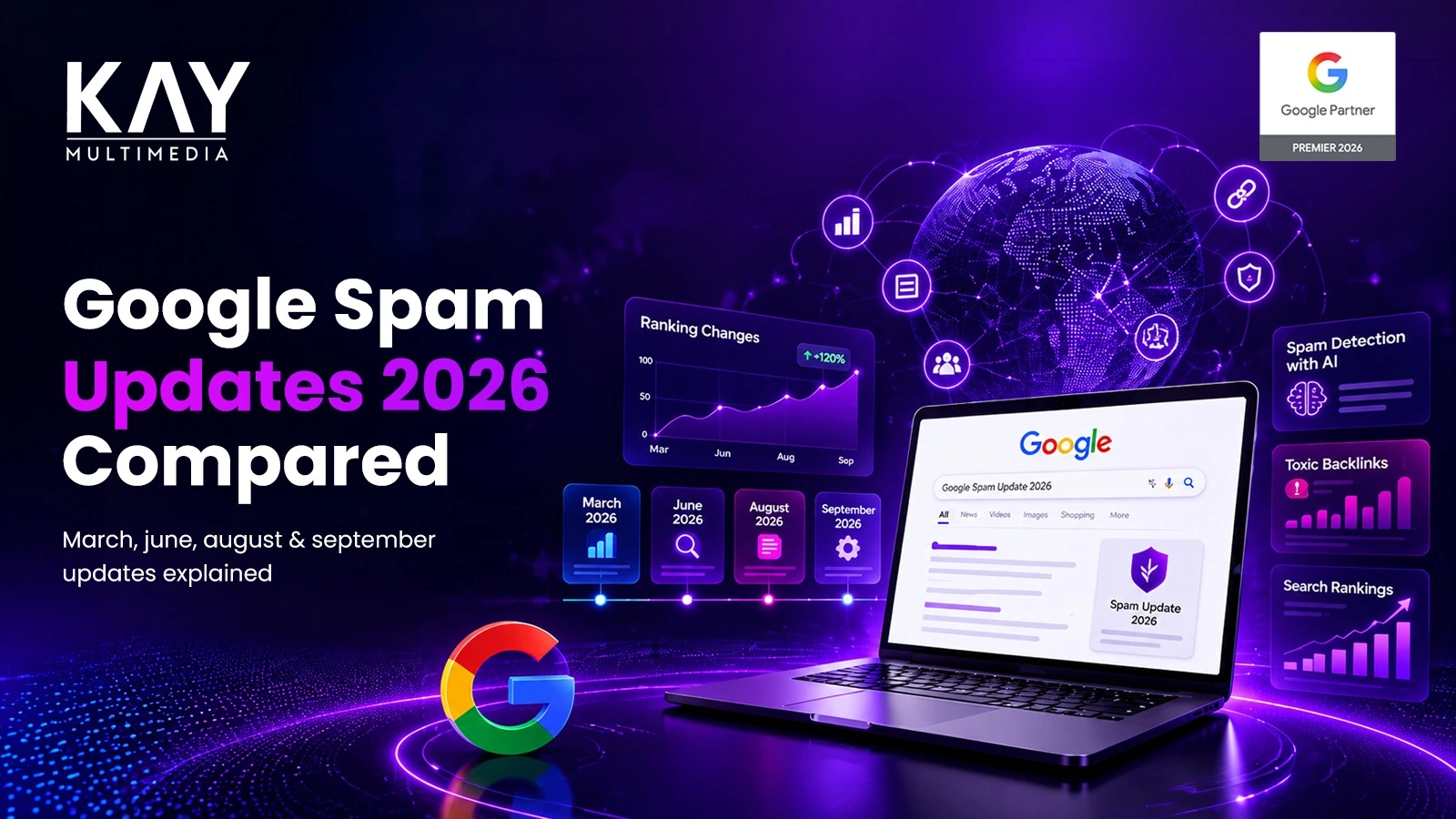
Google's search ecosystem has seen unusually frequent spam-related activity in 2026. Between March and September, Google confirmed four spam updates in March, June, August and September 2026.
For businesses relying on organic traffic, these updates raise important questions. Are all four updates targeting the same problems? Does a ranking decline mean Google considers a website spam? And how should businesses adjust their SEO strategies?
The most important point is that Google has not publicly assigned a different spam category to each 2026 update. While Google confirms when these updates occur, businesses should be cautious about claims that a particular update specifically targeted AI content, backlinks or another individual SEO tactic.
Instead, the four updates should be understood within Google's broader effort to detect practices that manipulate Search and improve the quality of results.
What Were the Google Spam Updates in 2026?
Through September, Google confirmed four spam updates in 2026:
| Update | Started | Completed | Approx. Duration | Scope |
| March 2026 Spam Update | March 24 | March 25 | 19.5 hours | Global, all languages |
| June 2026 Spam Update | June 24 | June 26 | 2 days, 1 hour | Global, all languages |
| August 2026 Spam Update | August 18 | August 21 | 2 days, 16 hours | Global, all languages |
| September 2026 Spam Update | September 24 | Ongoing as of Oct. 1 | Up to two weeks expected | Global, all languages |
The rollout periods varied considerably, but duration should not be interpreted as a measure of an update's severity.
What Is a Google Spam Update?
A Google spam update is a significant improvement to the automated systems Google uses to detect content and practices that violate its spam policies.
Google's spam-fighting systems operate continuously. According to Google Search spam policies, violations can result in pages or entire websites ranking lower or being omitted from Search.
Spam updates therefore shouldn't be viewed simply as occasional penalties. They represent improvements in Google's ability to identify attempts to manipulate its search systems.
March 2026 Spam Update
The March 2026 Spam Update began on March 24 and was completed on March 25, making it the shortest of the four confirmed spam updates through September.
It applied globally and across all languages.
Google did not publicly specify one particular type of spam targeted by the March update. Therefore, if a website experienced ranking changes during March 24–25, timing alone is not sufficient evidence to conclude that a particular SEO practice caused the decline.
Businesses should instead investigate the pages, keywords and search intent affected.
June 2026 Spam Update
The June 2026 Spam Update started on June 24 and finished on June 26, lasting slightly more than two days.
Again, the rollout was global and applied across languages.
The longer rollout compared with March does not necessarily mean the June update was larger or more aggressive. Google did not provide enough technical information to make that conclusion.
For SEO professionals, this highlights an important principle: avoid diagnosing algorithm changes through assumptions.
If traffic changes, examine Search Console data before making significant modifications to a website.
August 2026 Spam Update
Google launched another spam update on August 18, 2026, completing it on August 21.
The rollout lasted approximately two days and 16 hours.
As with the March and June updates, Google did not publish a list of individual spam tactics exclusively targeted by the August rollout.
This makes it particularly important to distinguish confirmed information from industry speculation.
A ranking decline may coincide with an update without proving that a website violated Google's spam policies.
September 2026 Spam Update
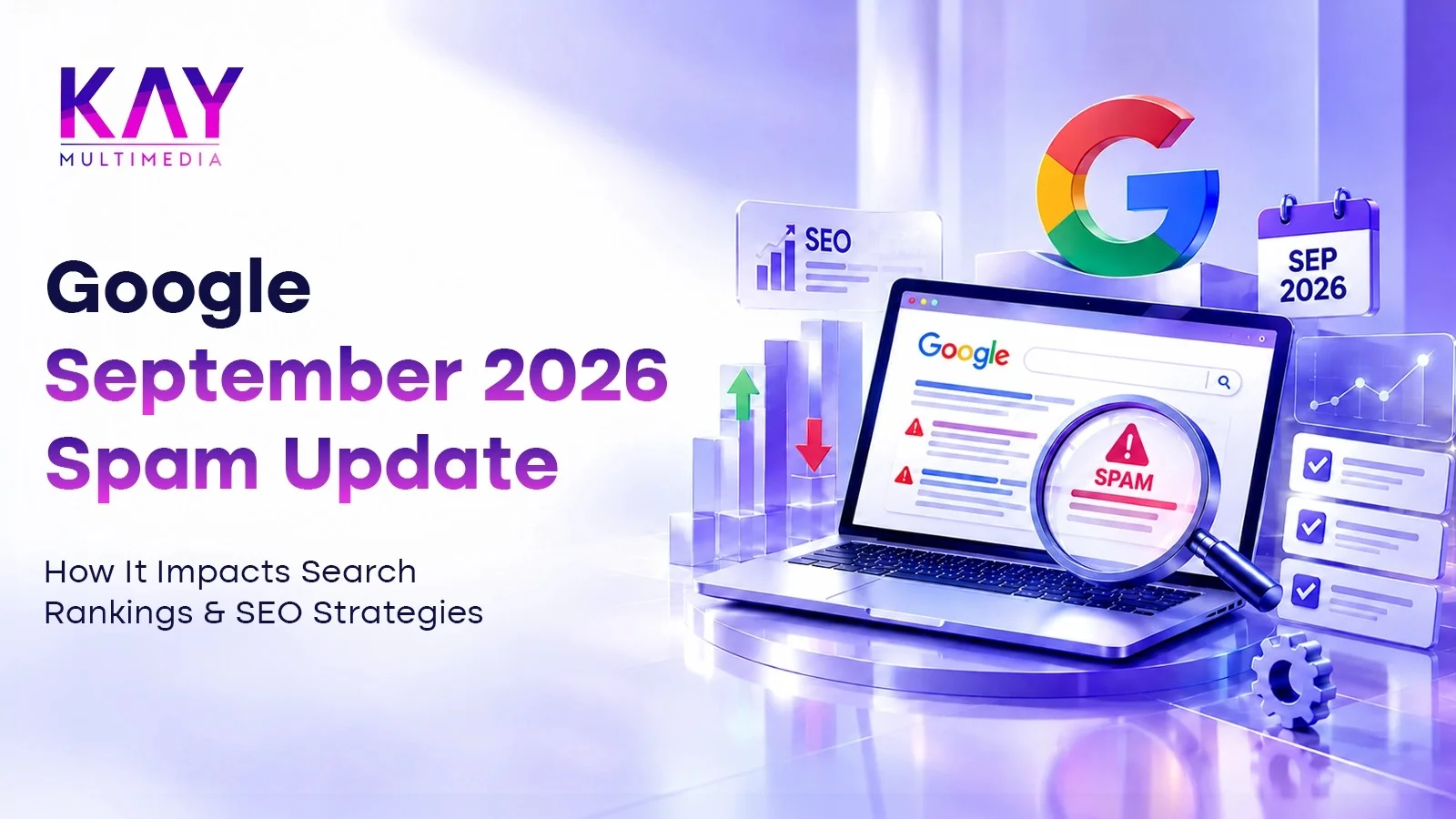
The fourth confirmed spam update began on September 24, 2026.
Unlike the earlier updates, Google said the rollout could take up to two weeks. As of October 1, the rollout remains active.
Businesses should therefore avoid making major SEO changes based only on short-term ranking volatility.
Instead, monitor:
- Organic clicks
- Search impressions
- Average ranking positions
- Landing-page performance
- Queries gaining or losing visibility
- Organic leads and conversions
Wait for meaningful patterns before drawing conclusions.
March vs June vs August vs September: What Changed?
The clearest confirmed difference between the four updates is their rollout duration.
March lasted less than one day, while June and August took several days. September has a significantly longer announced rollout window.
However, Google has not publicly provided enough information to say that each update targets a completely different spam technique.
What these updates collectively show is that Google's spam-detection capabilities continue to evolve.
Businesses should therefore focus less on trying to reverse-engineer individual updates and more on building sustainable SEO practices.
What SEO Practices Can Put Websites at Risk?
Google's spam policies identify numerous practices designed to manipulate Search. Several are particularly relevant to modern SEO.
1. Scaled Content Abuse
Publishing large volumes of pages is not automatically problematic. The risk occurs when content is produced at scale primarily to manipulate rankings while providing little value to users.
This can involve AI-generated, human-written or mixed content.
The key question is not who or what created the content, but whether it exists primarily to help users or manipulate rankings.
2. Keyword Stuffing
Keywords still help search engines understand relevance, but unnatural repetition can damage readability and cross into spam.
For example, a business targeting Digital Marketing Company in Chennai can use that phrase naturally within relevant sections.
Repeating it unnecessarily throughout every heading and paragraph, however, does not make a page more useful.
Google's Search Essentials recommends using the words people search for in prominent locations while also emphasizing helpful, reliable, people-first content.
3. Link Spam
Links remain important for discovery and authority, but businesses should avoid links created primarily to manipulate rankings.
A sustainable approach focuses on earning relevant mentions through quality resources, original research, digital PR, partnerships and useful content rather than artificially increasing backlink numbers.
4. Site Reputation Abuse
Google defines site reputation abuse around third-party pages published to exploit the established ranking signals of a host website.
Businesses hosting sponsored, partner or third-party sections should therefore review whether those pages genuinely serve their audience rather than existing primarily to benefit from the domain's authority.
5. Expired Domain and Doorway Abuse
Buying an expired domain is not automatically spam. Problems arise when a domain's previous reputation is exploited primarily to manipulate rankings with low-value content.
Similarly, businesses should avoid creating hundreds of nearly identical pages simply to target small keyword or location variations.
For local SEO, every location page should provide genuine local relevance rather than changing only a city name.
Does Google Consider AI Content Spam?
No. AI content is not automatically spam.
Google's concern is with practices such as scaled content abuse, where large amounts of low-value content are created primarily to manipulate rankings.
AI can support research, ideation, drafting and content organization. But businesses should still apply:
- Human review
- Fact-checking
- Original expertise
- Reliable sources
- Search-intent analysis
- Editorial quality control
This is increasingly important for both SEO and AEO. In 2026, Google clarified that its spam policies also apply to generative AI responses within Google Search.
What Should You Do If Rankings Drop After a Spam Update?
The first step is diagnosis, not immediate correction.
Use Google Search Console to identify when the decline began and which pages and queries were affected.
Determine whether the change is:
- Sitewide or page-specific
- Branded or non-branded
- Limited to one topic
- Related to rankings or click-through rates
- Connected with technical or indexing problems
Then review affected pages for search intent originality, usefulness, keyword usage, technical accessibility and internal linking.
Google itself has noted that a change after a spam update can mean its systems detected spam or began discounting spam-related signals that previously benefited a site.
However, timing alone still doesn't establish the exact cause.
How Should Businesses Adapt Their SEO Strategy?
Four spam updates do not mean businesses need four different SEO strategies.
They need a stronger long-term search strategy.
A business working with a Digital Marketing Company in Chennai should focus on technical SEO, useful content, search intent, internal linking, legitimate authority building and continuous performance measurement.
Instead of publishing thin pages for every keyword variation, businesses can create interconnected topic clusters.
A well-planned SEO content strategy can connect commercial pages with relevant informational content, helping users navigate related topics while improving the overall structure of a website.
Search intent should also guide content decisions. Understanding how search intent impacts SEO results can help businesses determine whether users expect a service page, guide, comparison, local result or direct answer before creating content.
What Do the 2026 Spam Updates Mean for AEO?
Answer Engine Optimization makes clear structure and direct answers increasingly valuable.
Businesses should create content around real audience questions and provide concise answers before expanding into detail.
For example:
How many Google spam updates happened in 2026?
Through September 2026, Google confirmed four spam updates: March, June, August and September.
Are AI-generated articles automatically considered spam?
No. Google focuses on whether content and practices violate its spam policies. AI use itself does not automatically make content spam.
Does a ranking decline mean Google penalized my website?
Not necessarily. Rankings can change for many reasons. Review Search Console data, affected pages, technical issues, search intent and spam-policy compliance before determining the likely cause.
This structure benefits readers because they can quickly locate answers while also making information easier for search and answer systems to interpret.
SEO & AEO Checklist After the 2026 Spam Updates
Businesses should review:
- Content usefulness and originality
- Search intent alignment
- AI-assisted content quality
- Large-scale or templated pages
- Natural keyword usage
- Backlink acquisition practices
- Internal linking
- Third-party content
- Location-page quality
- Technical crawlability and indexing
- Accurate and trustworthy sources
- Question-based AEO content
- Search Console performance
Most importantly, avoid changing dozens of elements simply because rankings fluctuate during an update.
Frequently Asked Questions
Which was the shortest Google spam update in 2026?
The March 2026 Spam Update was the shortest of the four confirmed updates through September, completing in approximately 19.5 hours.
Which 2026 spam update had the longest rollout?
The September update has the longest announced rollout window, with Google saying it may take up to two weeks. A longer rollout does not automatically mean a more severe update.
Can websites recover after a spam update?
Improvement may be possible when genuine policy or quality issues are identified and corrected. Reassessment may take time, so businesses should focus on resolving underlying problems rather than searching for immediate ranking fixes.
How can a Digital Marketing Company in Chennai help?
A Digital Marketing Company in Chennai can analyze Search Console performance, audit affected pages, review content and technical SEO, examine backlink practices and develop an evidence-based strategy instead of assuming every traffic decline was caused by an algorithm update.
Final Thoughts
Google's March, June, August and September 2026 spam updates demonstrate that spam prevention is an ongoing part of Search.
Although the rollout periods differed, Google has not provided sufficient evidence to assign a unique spam target to each update.
Businesses should therefore focus on what Google consistently communicates: create useful content, avoid manipulative practices, maintain strong technical foundations and make SEO decisions using reliable performance data.
For businesses evaluating a Digital Marketing Company in Chennai, sustainable SEO should be built around search intent, original content, technical quality, legitimate authority and measurable results, not shortcuts designed to temporarily exploit ranking systems.
As Google continues improving both traditional and AI-powered Search, those fundamentals remain the strongest foundation for long-term organic visibility.





 Call Now

