
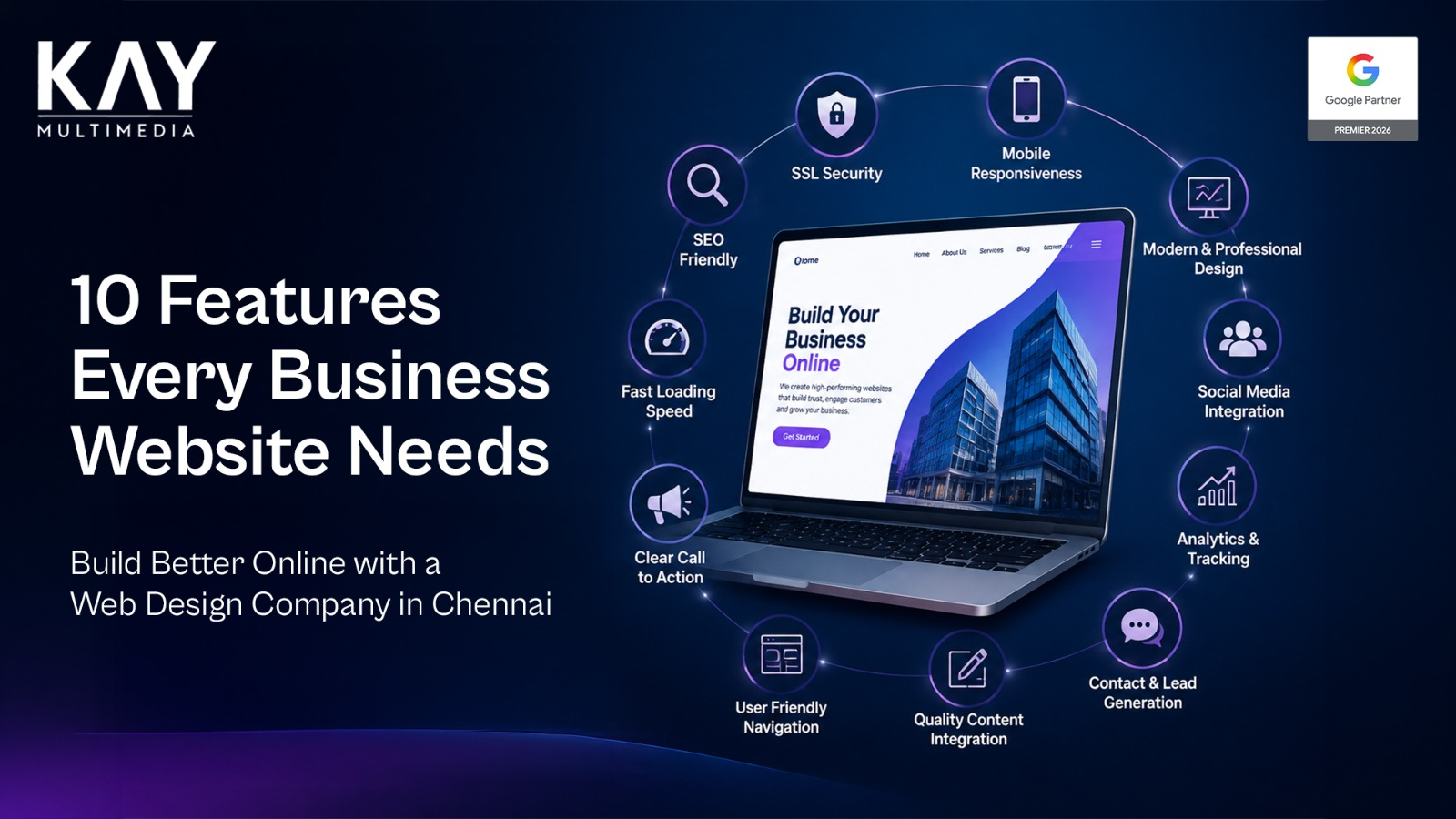
A modern business website should be fast, mobile-friendly, secure, easy to navigate, SEO-ready and built around customer needs. It should not only explain what your business offers but also create trust, generate enquiries and support your digital marketing goals. The right website combines design, technology, content and performance to turn visitors into customers.
Why Does Every Business Need a Modern Website?
A website is often the first place potential customers visit after discovering a business through Google, social media, advertisements or referrals.
Think about your own online behaviour. If a website takes too long to load, looks outdated, is difficult to navigate or does not work properly on your phone, would you stay?
Probably not.
Modern customers expect businesses to provide a smooth digital experience. That means your website needs to do more than look attractive. It needs to communicate clearly, perform efficiently and make it easy for visitors to take action.
A well-designed website can help your business:
- Build credibility and trust
- Generate qualified leads
- Improve search visibility
- Showcase products and services
- Support Google Ads campaigns
- Improve customer experience
- Increase conversions
- Strengthen your overall digital presence
For businesses planning a new website or redesign, working with an experienced Web Development Company in Chennai can help bring these elements together strategically.
What Are the 10 Essential Features of a Modern Business Website?
Here are the ten features every business should consider when developing or redesigning its website.
1. Should a Business Website Have Responsive Design?
Yes. A modern website should be fully responsive so that it works properly across smartphones, tablets, laptops and desktop computers.
Responsive design allows the website layout, images, text, buttons and navigation to adapt to different screen sizes.
This is particularly important because Google uses the mobile version of website content for indexing and ranking under mobile-first indexing. Google's current documentation recommends mobile-friendly websites and explains how responsive design can serve the same HTML on the same URL across different devices.
A responsive website should provide:
- Easy-to-read text
- Touch-friendly buttons
- Simple mobile navigation
- Properly scaled images
- Fast mobile performance
- Consistent content across devices
2. Why Is Website Speed Important?
Website speed directly affects how users experience your business online.
Imagine someone searching for your service and clicking your website. If the page takes too long to load, they may simply return to Google and choose another business.
A fast website should minimize unnecessary scripts, optimize images, use efficient hosting and keep page resources under control.
Businesses can use Google's PageSpeed Insights to evaluate page performance and identify potential improvements.
Important areas to monitor include:
- Page loading performance
- Image optimization
- JavaScript execution
- Server response time
- Mobile performance
- Core Web Vitals
Speed should be considered during development rather than treated as an afterthought.
3. How Does Clear Website Navigation Improve User Experience?
A visitor should not have to search through multiple pages to understand what your business does.
Clear navigation helps users find important information quickly.
A typical business website may include:
- Home
- About Us
- Services
- Industries
- Portfolio or Case Studies
- Blog
- Contact Us
Navigation should be consistent throughout the website.
For larger websites, dropdown menus, breadcrumbs, search functionality and properly categorized pages can make information easier to discover.
Good navigation also helps search engines understand relationships between pages when your website architecture and internal links are structured logically.
4. Why Should Every Business Website Use HTTPS Security?
Website security is essential for protecting visitors and maintaining trust.
HTTPS encrypts communication between a user's browser and the website. Businesses should also keep their CMS, plugins, themes, frameworks and other software components updated.
Security becomes even more important when websites collect:
- Contact information
- Login credentials
- Enquiry details
- Payment information
- Customer data
The OWASP Web Security Testing Guide provides detailed guidance around web application security, including HTTPS-related security controls.
For a business website, HTTPS should be considered a basic requirement rather than an optional feature.
5. How Does an SEO-Friendly Website Structure Help Businesses?
A website can have an impressive design and still struggle to generate organic traffic if search engines cannot properly understand its content.
An SEO-friendly website should have a logical structure that supports both users and search engines.
Important elements include:
- Descriptive page URLs
- Proper H1, H2 and H3 headings
- Unique title tags
- Relevant meta descriptions
- Optimized images and alt text
- Internal links
- XML sitemap
- Canonical URLs where appropriate
- Crawlable content
- Structured data where relevant
Internal linking is particularly valuable because it connects related pages and helps users discover additional information.
For example, a website development page could link to relevant SEO Content Strategy Services, Digital Marketing Company in Chennai and content strategy pages.
6. Why Are Clear Calls-to-Action Important?
A website should tell visitors what to do next.
This is where calls-to-action, commonly called CTAs, become important.
Examples include:
- Get a Free Consultation
- Request a Quote
- Contact Us
- Call Now
- Book a Consultation
- Schedule a Demo
- Get Started
The CTA should match the visitor's intent.
For example, a service page could use "Request a Quote", while an informational blog may use "Contact Our Experts".
Avoid filling every section with aggressive sales messages. Instead, use CTAs where they naturally support the user's journey.
7. What Type of Content Should a Modern Business Website Include?
Design attracts attention, but useful content helps visitors make decisions.
Every important page should answer the questions your customers are likely to ask.
Service pages, for example, can explain:
- What the service is
- Who needs it
- How it works
- What benefits it provides
- What makes your business different
- Frequently asked questions
- How to get started
Content should be clear, specific and written for real users rather than created solely to insert keywords.
For SEO and AI search visibility, answer important questions directly and use logical headings, definitions, lists, examples and concise explanations.
A business can also strengthen topical authority through useful blog content that connects naturally with its service pages.
8. How Can Lead Generation Forms Improve Business Websites?
A website should make it easy for interested visitors to contact your business.
Lead generation forms are one of the simplest ways to do this.
A basic form may request:
- Name
- Email address
- Phone number
- Company name
- Requirement
Avoid asking for unnecessary information. A long form can discourage people from completing it.
Forms should also provide clear confirmation after submission so users know whether their enquiry was successfully received.
For businesses running paid advertising, form submissions can also become important conversion actions that help measure campaign performance.
9. Why Should Websites Display Trust Signals?
Visitors may hesitate to contact a business they have never worked with before.
Trust signals help reduce that hesitation.
Consider including:
- Customer testimonials
- Google reviews
- Client logos
- Case studies
- Industry certifications
- Awards
- Professional memberships
- Years of experience
- Project results
- Clear contact information
However, trust signals should be genuine and verifiable.
Do not add exaggerated claims simply because they sound impressive. Authentic information is more valuable for users and contributes to a stronger overall brand presence.
10. How Does Analytics Help Improve Website Performance?
Launching a website is not the end of the process.
You need to understand how people use it.
Analytics can show important information such as:
- How many users visit your website
- Which pages attract visitors
- Where traffic comes from
- Which devices visitors use
- How users interact with pages
- Which actions lead to conversions
Google Analytics is designed to collect data from websites and apps and provide reports that help businesses understand user behaviour.
Businesses should also consider Google Search Console for monitoring search visibility, indexing, search queries and technical search performance.
Analytics becomes especially useful when combined with conversion tracking. Instead of simply asking, "How much traffic did we receive?", businesses can ask, "Which website activities generated valuable enquiries?"
What Is the Difference Between a Modern and Outdated Business Website?
| Feature | Modern Website | Outdated Website |
| Mobile Design | Responsive across devices | Difficult to use on mobile |
| Speed | Optimized for performance | Slow loading |
| Navigation | Clear and intuitive | Confusing |
| Security | HTTPS and maintained software | Security risks |
| SEO | Structured and optimized | Limited optimization |
| Content | Helpful and user-focused | Mostly promotional |
| CTAs | Clear conversion paths | Few or unclear |
| Analytics | Conversion and performance tracking | Limited data |
| Trust | Reviews, case studies, credentials | Little social proof |
| Scalability | Designed for future growth | Difficult to update |
How Do These Features Work Together?
The real value does not come from adding ten features independently.
They need to work together.
For example:
Responsive design + fast speed improves the mobile experience.
SEO structure + useful content helps search engines understand your website.
Clear navigation + internal linking helps visitors discover relevant information.
Trust signals + strong CTAs can encourage users to contact your business.
Analytics + conversion tracking helps you understand what is working.
This creates a website that functions as part of your broader digital marketing strategy rather than simply acting as an online brochure.
Which External Sources Should Businesses Reference?
External links should support claims or direct readers to useful authoritative resources.
Recommended sources include:
- Google Search Central for mobile-first indexing and search guidance
- Google Analytics Help for analytics implementation and reporting
- OWASP for web security guidance
- W3C Web Accessibility Initiative for accessibility guidance
The purpose of external linking is not to add as many links as possible. A few relevant, authoritative references are generally more useful than a long list of unrelated links.
Frequently Asked Questions
What are the most important features of a modern business website?
The most important features include responsive design, fast loading speed, secure HTTPS, clear navigation, SEO-friendly structure, useful content, strong calls-to-action, lead forms, trust signals and analytics.
Why is mobile-friendly design important for business websites?
Mobile-friendly design ensures visitors can easily read content, navigate pages and complete actions on smartphones and tablets. Google also uses the mobile version of website content for indexing and ranking.
How fast should a business website load?
There is no single loading-time target that guarantees success. Businesses should focus on delivering a fast, responsive experience and monitor performance using tools such as PageSpeed Insights and Core Web Vitals.
Does website design affect SEO?
Yes. Website structure, mobile usability, page experience, navigation, content accessibility and technical implementation can all influence how effectively search engines crawl, understand and serve website content.
How often should a business website be updated?
Websites should be reviewed regularly for outdated content, broken links, security updates, technical issues, performance problems and changing customer needs. Major redesigns depend on business goals and how well the existing website performs.
What Are the Key Takeaways?
- A modern business website needs to be responsive, fast, secure and easy to navigate.
- SEO should be considered during website planning and development, not added only after launch.
- Clear CTAs and simple lead forms help turn website visitors into potential customers.
- Useful content should answer customer questions and communicate the value of your products or services.
- Reviews, testimonials, case studies, certifications and other genuine trust signals can strengthen credibility.
- Analytics and conversion tracking help businesses understand website performance and make informed improvements.
- Internal links connect related pages and help users discover more relevant information.
- Authoritative external sources can support important claims and provide additional value to readers.
- A professionally developed website should support your broader SEO, advertising, content and digital marketing strategy.
Conclusion
A modern business website should do much more than display your company name, services and contact details. It should provide a smooth user experience, communicate your value clearly, support search visibility, build trust and encourage visitors to take meaningful action.
From responsive design and website speed to SEO structure, security, content, analytics and conversion-focused CTAs, each feature contributes to the overall performance of your online presence.
If your current website feels outdated, is difficult to use on mobile devices, loads slowly or fails to generate enquiries, it may be time for a strategic redesign.
Choosing an experienced Web Design Company in Chennai can help you create a website that combines attractive design with performance, usability, SEO, security and business objectives.
Build a Website That Works for Your Business
Looking to create or upgrade your business website? KAY Multimedia develops responsive, SEO-friendly, user-focused websites designed around business goals and customer needs. Explore our web development services and take the next step toward building a stronger digital presence.






 Call Now

